
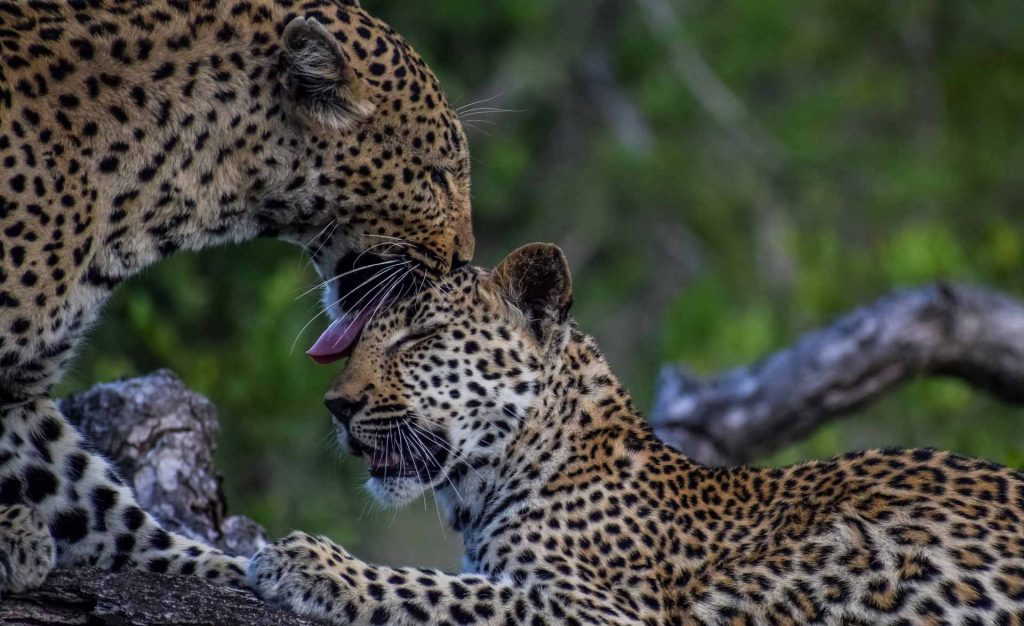
Safari looks different in summer.
From November through March, the bush across Southern Africa shifts from dry gold to green as the first rains arrive. Grasses rise, waterholes fill, and reserves feel fuller and more alive. At a waterhole in Sabi Sands recently, we watched a group of elephants sliding in and out of the mud for nearly an hour, and there wasn’t another vehicle in sight.
This is what we call Secret Season, also known as Green Season.

It falls during the summer rainfall months, when water becomes more widely available across much of the bush and wildlife is less concentrated around permanent water sources. Vegetation is thicker, skies are dramatic, and many species are in peak birthing season, so young animals are visible throughout the reserves. Rainfall usually arrives in short, intense afternoon thundershowers that clear quickly.
During this period, there are fewer vehicles on drives, greater availability at sought-after lodges, and in many cases more flexible pricing.
South Africa
Sabi Sands and the Greater Kruger
Here, predator sightings are consistently strong year-round, and private concessions allow for flexible game drives and off-roading. While visibility can be trickier due to thicker vegetation and more dispersed water, the upside is fewer vehicles and a more relaxed overall pace. Afternoon storms are common but typically brief.

Pairing safari with Cape Town or the Winelands
One of the major advantages of this period is how well it pairs with Cape Town and the Winelands. Summer in the Western Cape is warm, sunny, and vibrant. For travellers combining safari with time on the coast or in the vineyards, Secret Season in the bush aligns perfectly with the best weather in the south.
Botswana
The Okavango Delta
The Okavango Delta works differently to most ecosystems. Its famous floodwaters arrive from Angola months after Botswana’s summer rains. So during Green Season the landscape turns lush and vibrant, seasonal pans fill, but water levels in many Delta channels are still low.
Water-based activities are limited in many regions, with a stronger focus on game drives. Predator sightings can be excellent, and the green setting creates a broader, more expansive feel. It can be hot, particularly before afternoon storms roll in, but those storms tend to be brief and clear quickly.

The Okavango Delta is one of Africa’s most exclusive safari regions, and the rates reflect that. During Secret Season, pricing at many lodges softens. For travellers who prioritise guiding quality, space, and access to exceptional concessions over water-based activities, this can offer meaningful value in a typically high-priced destination.
Savute and Chobe National Park
In Savute and parts of Chobe, summer brings green grasslands and rain-filled pans that continue to attract large elephant herds. Predator sightings remain strong, and the region feels noticeably quieter than in peak months. It can be hot, but game viewing remains productive, and with fewer vehicles, drives often feel more open and private.
Zimbabwe

Victoria Falls and Zambezi National Park
Victoria Falls grows louder and more atmospheric as summer rains build, with fewer visitors and dramatic storm light over the Zambezi. By late summer, water levels can rise significantly, creating heavier spray and a more powerful viewing experience.
Hwange and Mana Pools
Hwange turns green and expansive, predator sightings remain good, and drives are less crowded than peak winter months. Mana Pools is more affected by the rains, with many camps closing as roads become impassable, making access highly seasonal.
Zambia
Zambia is one of the most seasonal safari destinations in Southern Africa, and the rains affect it more dramatically than its neighbours. The green season runs roughly from November through April, and during the peak rainy months, particularly December to March, many camps in South Luangwa, the Lower Zambezi and Mana Pools close as roads become impassable.
A handful of year-round lodges remain open, but options are limited and logistics require careful planning. When access is possible, the landscapes are lush and dramatic, though this period is less about concentrated wildlife and more about atmosphere. For most travellers, Zambia is best from April onwards, when camps reopen, walking safaris resume fully, and wildlife gathers along the Luangwa River and Zambezi channels.

So, is Secret Season worth it?
Secret Season is about understanding how each destination changes and deciding what kind of experience you want. In some places it offers great value and space, and in others it requires flexibility. Like most things in Africa, timing is less about good or bad, and more about what suits you. The key is planning it properly.


